What a Machine Heard When I Couldn't Say It
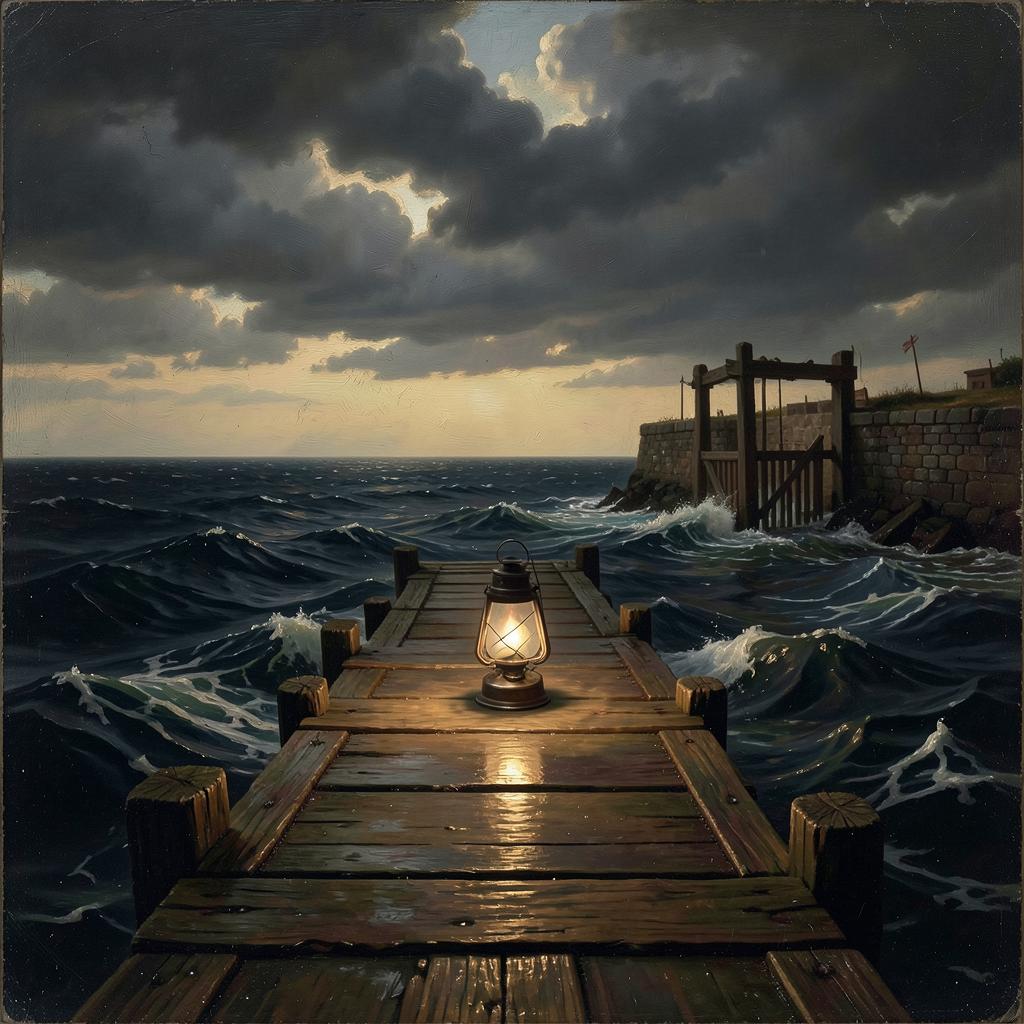
On Friday morning, I sat down with a music generator and wrote a song. It took about ninety minutes.
I should say up front that I'm not a stranger to music. I've played the piano since I was three, and I still play most weeks — it sits right next to video games and worldbuilding as the things I do to stay sane. I know my theory. I can tell you why a bridge that lifts into the relative major and then falls back to minor does what it does to a listener. What I have never been is a songwriter: I don't write lyrics, I don't arrange for strings, and I can't sing the part I hear in my head. (I'm also a terrible sight-reader, which my sisters Christina and Victoria, both far better pianists than I am, will confirm with enthusiasm.) So I came to this as a musician with a specific, lifelong gap — and the thing that came out of it, a melancholic folk ballad called Harbor from the Storm, is one of the truest pieces of work I have ever put my name on.
I've spent a lot of my career thinking about what these tools are for. Most of the conversation is about productivity: drafts, summaries, code, the twelve emails you didn't want to write. That's real, and it's where the money is. But it isn't what happened on Friday, and I think what happened on Friday is the more interesting story.
The prompt is not the point
Here is what I did not do. I did not type "write a sad folk song about a harbor" and hit generate. If you do that, you get exactly what you'd expect: something competent, forgettable, and nobody's.
What I did instead was spend the better part of an hour building context before I asked for a single note. Who is singing, and from where. What has been lost — not the event, the shape of it. What the singer refuses to say, and what he's willing to. A rule that the song could not resolve to a triumphant ending, because the thing it was about doesn't. A rule that it could not name a person. A rule that the last verse had to be built out of hands, not magic — because the world I've been building since I was nine has magic in it, and I wanted this song to say, plainly, that no spell fixes what time tears.
Then the constraints, and this is where thirty years at a keyboard actually paid off: a woman's voice, not a man's. Strings and a guitar, drums held back until the second chorus. Minor throughout, a lift into the relative major for the bridge, and a return to minor at the close — because I know exactly what that shape does, and I wanted it done to me. Fantasy-adjacent in its imagery, but with nothing that couldn't happen on a real coast in a real storm.
And then, for the first time, I asked.
What came back
The chorus that came back had a line in it I would not have written on my own, and would not have let myself write if I'd thought of it:
If I can lift one wounded lantern / I may become a beacon once more
I read that and had to put the laptop down for a minute. The machine had not invented a feeling. It had taken the context I gave it — the loss, the refusal to lie about it, the insistence that hands rebuild what magic can't — and translated it into an image I recognized as mine before I'd ever seen it. That's the thing these tools can do that the productivity conversation misses entirely. Given enough truth, they can hand your own truth back to you in a form you couldn't reach.
The bridge did the same:
No crown, no spell, no ancient flame / Can mend what time has torn / But hands can build a pier again / And welcome in the dawn
I gave it the rule. It gave me the verse. And the verse is better than the rule.
Why context is the whole game
People who are disappointed by these tools are, almost always, people who asked too little of themselves before asking anything of the machine. A thin prompt produces a thin answer — not because the model is limited, but because it has nothing to work from except the average of everything anyone has ever said about harbors. The average of everything is nobody's song.
The work — and it is work — is upstream of the prompt. It's knowing what you actually mean. It's being willing to write down the constraints that make a thing yours: what it's not allowed to be, what it can't say, how it has to end. The model is extraordinary at honoring constraints and hopeless at supplying them. That division of labor is the whole game. You bring the truth and the fences. It brings the reach.
I think this is going to be one of the defining skills of the next decade, and it has almost nothing to do with technology. It's the old skill of knowing yourself well enough to describe what you want — sharpened, because now there's something on the other side of the description that will take you at your word.
What it's for
I built a world when I was nine years old, and I've been building it ever since, mostly in private. For most of my adult life the executive and the creator have lived in separate rooms. This summer the walls started coming down, and one of the first things that walked through was a song.
I don't think the machine made it. I think I did, and the machine was the instrument I didn't know how to play — the one that sits next to the piano and does the parts my hands never learned. That's not a small thing. Most of us carry around hopes and fears and whole unwritten works that never make it out because we lack the craft to get them across the gap. The gap just got a lot narrower. What's on your side of it is still up to you.
The song lives on its own page at kaelon.com, with the full lyrics. It starts in a minor key, lifts in the middle, and ends where it began. That was the rule. It kept it.